Operation and Maintenance Guide for Laser Sources / Laser Tubes in Cold Weather
As winter temperatures continue to drop, low-temperature environments pose increasing challenges to the stable operation of laser equipment. In particular, laser sources, laser tubes, and
water-cooling systems are highly susceptible to freezing. Once freezing occurs, it may cause serious damage to internal pipelines, seals, or even the laser source itself, resulting in high repair
costs and unexpected downtime.
To ensure safe operation and extend equipment service life, Foster Laser has compiled the following winter anti-freezing guidelines. All users are strongly advised to read and implement these
measures carefully.
First Replace Coolant with Antifreeze in Time to Prevent Freezing Damage
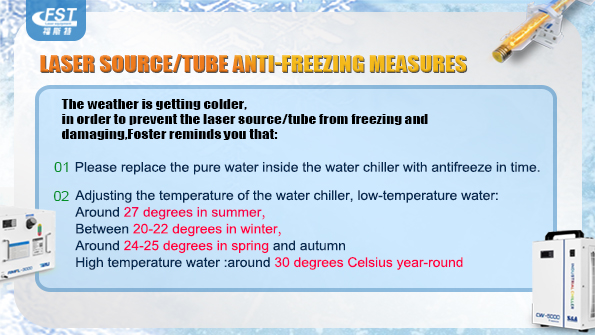
When the ambient temperature may fall below 0°C, please promptly replace the purified water or deionized water in the water chiller with qualified antifreeze.
Important Notice
Damage to the laser source or water-cooling system caused by failure to replace antifreeze in time is not covered by warranty.
Anti-freezing measures must be completed before severe cold weather arrives. Do not wait until freezing has already occurred.
Second Proper Adjustment of Water Chiller Temperature Settings
Adjust the water chiller temperature settings according to seasonal conditions to avoid excessively low water temperatures or abnormal operation.
Recommended temperature settings:
Low-temperature water (summer): approx. 27°C
Low-temperature water (winter): 20–22°C
Low-temperature water (spring & autumn): approx. 24–25°C
High-temperature water: approx. 30°C year-round
Correct temperature control not only helps prevent freezing but also ensures optimal operating conditions for the laser source.
Third Antifreeze Selection Recommendations (Critical)
We strongly recommend using antifreeze from CLARIANT, which offers excellent stability and compatibility and is well suited for laser systems.
Recommended types:
1) ANTIFROGENN (Ethylene Glycol water Type)
Industrial grade
Toxic to humans
Proper safety protection is required during handling
2) ANTIFROGENL (Propylene Glycol water Type)
Food-grade
Harmless to humans
More environmentally friendly and safer (recommended)
The use of the following is strictly prohibited:
Alcohol-based antifreeze
Antifreeze with unknown corrosiveness or non-compliant composition
Any equipment damage caused by the use of antifreeze that does not meet the above requirements shall be borne by the customer.
Fourth Antifreeze Usage Cycle and Replacement Instructions
Antifreeze cannot be used as a year-round replacement for deionized or purified water.
Antifreeze is intended only for temporary use during winter or low-temperature conditions.
After winter, please ensure the following steps are completed:
1.Completely drain the antifreeze from the system
2.Thoroughly flush the pipelines with deionized or purified water
3.Resume the use of deionized or purified water as the cooling medium
This procedure is essential to prevent residual corrosion and to maintain long-term stable operation of the laser system.
Fifth Additional Reminders
If the equipment is installed in unattended locations, subject to overnight power shutdowns, or located in extremely cold regions, anti-freezing measures must be implemented in advance.
If you have any questions regarding antifreeze selection or replacement procedures, please feel free to contact the Foster Laser Technical Support Team.
Foster Laser is committed to providing safe, stable, and reliable fiber laser cutting machine along with professional technical support.
Winter anti-freezing is critical—early prevention is the most effective way to avoid unnecessary losses.
Technical Support Email: info@fstlaser.com
Service Hotline: +86 0635 7775555 / 7772888
Post time: Dec-26-2025

