
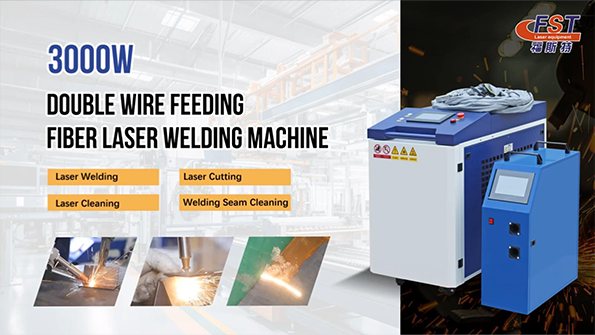
In the daily operation of laser welding equipment, many users focus primarily on achieving high welding efficiency, while often overlooking an equally critical step—proper shutdown.
In fact, a standardized shutdown sequence is essential not only for operational safety but also for extending the service life of the laser source, water chiller, and electrical components.
This article uses a handheld laser welding machine as an example to explain the standard shutdown procedure and key precautions in detail.
FIRST Why Is the Shutdown Sequence So Important?
Laser welding machines for metal are high-power precision systems that integrate a laser source, water cooling system, electrical control modules, and multiple gas supply circuits.
An improper shutdown sequence may result in:
Residual laser energy not being properly released
Premature shutdown of the cooling system, causing localized overheating
Gas supply not being shut off, creating potential safety hazards
Electrical components exposed to sudden power surges, reducing service life
A correct shutdown procedure is one of the most basic and effective ways to protect the equipment.
SECOND Standard Shutdown Procedure for Laser Welding Machines
After welding operations have completely stopped, perform the following steps in the specified order:
Step 1: Stop Laser Emission and Reset the Laser Button
Once welding is completed, stop laser output and immediately reset the laser activation button to ensure the laser source is no longer emitting.
This is the most critical step in the shutdown process and must be performed first.
Step 2: Stop and Reset the Water Chiller
Reset the water chiller operation button to stop the cooling water circulation.
Shutting down the cooling system only after the laser has stopped operating helps prevent heat accumulation inside the laser source.
Step 3: Close All Gas Valves
Shut off all gas valves, including shielding gas and auxiliary gas supplies, to prevent continuous gas leakage or potential safety risks.
Leaving gas supplies on for extended periods leads to unnecessary costs and safety concerns.
Step 4: Turn Off the Main Power Switch
After confirming that the laser source, cooling system, and gas supplies are all shut down, reset the main power switch to completely disconnect power to the machine.
Step 5: Place the Handheld Welding Head on the Holder
Finally, place the handheld welding laser machine head securely on the designated holder to prevent lens contamination, accidental drops, or unintended activation.
Good shutdown habits are essential for long-term equipment stability.
THIRD Post-Shutdown Inspection and Good Practices
After shutdown, it is recommended to perform a brief inspection:
Confirm that the control panel is completely powered off
Ensure the welding head is properly secured
Check for any signs of water or gas leakage in the work area
Making standardized shutdown procedures part of daily operations helps to:
Extend the service life of the laser source and water chiller
Reduce equipment failure rates
Improve overall operational safety
Conclusion
Shutting down a laser welding machine is not as simple as turning off the power—it is a systematic and well-defined operational process.
Each proper shutdown adds an extra layer of protection for stable performance and long-term reliability.
Develop good operating habits for more durable equipment and safer welding operations.
Post time: Feb-04-2026

