
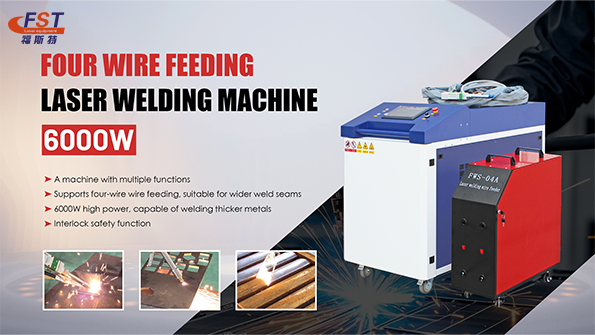
During daily operation of laser welding machines 4 in 1, factors such as the operating environment, user practices, and maintenance conditions can all affect welding stability. In practical
use, some users may encounter issues such as system alarms, no laser output, or excessive consumption of optical components.
Based on practical application experience, this document outlines selected common faults and basic troubleshooting approaches for laser welding machines, helping users quickly identify
possible causes and improve operational efficiency.
FIRST Analysis of Laser Source Alarm Issues
Laser source alarms are typically related to the cooling system, optical connections, or water circulation conditions. Initial checks may be performed from the following aspects:
1. Chiller Abnormality
First, confirm that the water chiller is powered on and operating properly. Check whether the chiller displays any alarm messages, as cooling system faults are among the most common causes
of laser source alarms.
2. QBH Interface Alarm
If the alarm originates from the QBH interface, it is usually caused by a loose installation between the fiber head and the collimation unit. As this issue involves optical path safety, self-
disassembly is not recommended, and professional after-sales service personnel should be contacted for inspection and repair.
3. Poor Water Circulation
Blockage in the internal water circulation of the laser source or air trapped in the cooling water pipes may also trigger alarms. Inspect the water circuit and, under safe operating conditions,
release any trapped air to restore normal water flow.
SECOND Common Causes of No Laser Output
When a laser welding machine does not emit laser output, troubleshooting should be carried out step by step, from simple to more complex checks:
1. Basic Operating Status Check
Confirm that the laser source is powered on, observe whether the red guide light is emitted from the welding gun nozzle, and check for any laser alarms. At the same time, verify whether the
“Enable” indicator on the laser control panel is illuminated.
2. Oscillating Mirror Damage
If the red guide light is not emitted from the welding gun while no laser alarm is present and the enable status is normal, the issue may be caused by a damaged oscillating mirror. In this case,
replacement by after-sales service personnel is required.
3. Laser Control or Authorization Issues
If the red guide light is emitted normally and there are no laser alarms, but the enable indicator on the laser panel does not light up after activation, the issue may be related to laser
authorization or control mode settings. A computer connection to the laser source is required to check whether the control mode is set to external control and to verify authorization status by
entering the appropriate access credentials.
4. Safety Interlock Not Satisfied
If all the above checks are normal, further verify whether the safety lock on the touch screen is enabled and whether the welding gun is properly connected to the grounding cable. If the safety
interlock conditions are not met, laser emission will be inhibited.
THIRD Causes of Frequent Protective Lens Damage
The protective lens is a consumable component in laser welding machines. Frequent damage is generally associated with the following factors:
1. Shielding Gas Not Activated
If shielding gas is not enabled or is insufficient during welding, excessive spatter may directly impact the protective lens, accelerating wear.
2. Excessive Laser Power Settings
When the laser power is set to a high level, especially above 90%, it is recommended to apply an appropriate defocused welding mode to reduce spatter intensity and minimize impact on the
protective lens.
3. Improper Welding Angle
During welding, the angle between the welding gun and the workpiece surface should generally be maintained within 0°–65°. Direct 90° vertical incidence of the laser beam onto the workpiece
should be avoided whenever possible.
Extra attention is required when welding highly reflective materials such as aluminum alloys.
FOURTH Common Causes of Water Tank Alarms
1. Excessive Water Temperature
When the water temperature exceeds the allowable range, the system will trigger an alarm. In such cases, power off the machine first and check whether the rear exhaust vents of the cabinet are
obstructed, ensuring proper heat dissipation.
2. Abnormal Water Flow
Water flow alarms are often caused by bent, compressed, or blocked water hoses. Inspect the routing of all water pipes to confirm that there are no visible bends or obstructions.
Conclusion
Laser welding machines are high-precision, highly integrated systems, and any abnormality in a single component may affect overall performance. Through proper identification of common
fault symptoms and standardized troubleshooting procedures, downtime can be reduced and production efficiency improved.
It should be emphasized that the issues described above represent only some common fault examples. If faults cannot be clearly identified or involve optical paths or electrical systems, users are
strongly advised to contact professional after-sales service personnel to avoid further risks caused by improper handling.
Post time: Feb-03-2026

