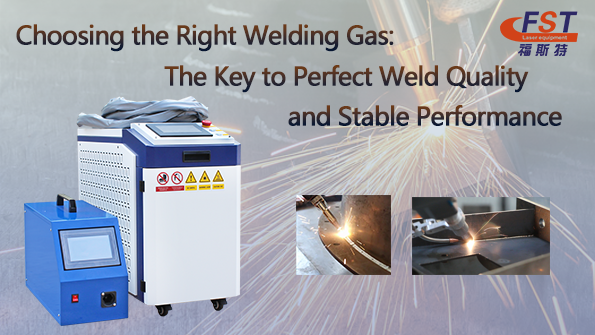
— The Impact of Different Gases on Welding Quality and Equipment Stability
In welding processes, the selection of shielding gas directly affects weld quality, welding stability, and equipment service life. Especially in laser welding and high-precision
welding applications, proper shielding gas selection is a critical factor in ensuring consistent welding performance and process reliability.
This article provides a systematic overview of commonly used soldadora laser gases and their application scenarios.
FIRST Main Functions of Welding Gases
During welding, the weld zone temperature rises rapidly within a very short time. The metal enters a molten or semi-molten state and can easily react with oxygen and nitrogen in the air. The
primary functions of shielding gases include:
Isolating the weld area from air to prevent oxidation and discoloration
Stabilizing the molten pool and improving weld formation consistency
Reducing porosity, spatter, and other welding defects
Improving weld appearance and overall product quality
Protecting welding torches, nozzles, and optical components, thereby extending equipment service life
SECOND Common Types of Welding Gases and Their Characteristics
Nitrogen (N₂)
Nitrogen is a commonly used and cost-effective shielding gas, particularly suitable for stainless steel welding. Due to its relatively low cost, nitrogen delivers excellent performance in many
welding applications.
Key Characteristics:
Stable shielding performance with clean, smooth weld surfaces
Helps achieve good weld appearance
High cost efficiency, suitable for continuous production
Recommended Applications:
Stainless steel welding (highly recommended)
Thin sheet welding
Applications with high requirements for weld appearance and consistency
For stainless steel welding, nitrogen is strongly recommended as it provides more stable and superior overall welding results.
Argon (Ar)
Argon is an inert gas with stable chemical properties and is one of the most widely used shielding gases in welding applications.
Key Characteristics:
Chemically inert and unlikely to react with metals
Stable shielding performance with good weld formation
Suitable for a wide range of materials
Recommended Applications:
Carbon steel welding
Stainless steel welding
Aluminum alloys and other non-ferrous metals
Helium (He)
Helium features excellent thermal conductivity and high ionization energy, although it is relatively expensive.
Key Characteristics:
Increases weld penetration depth
Enhances welding stability
Particularly effective for high-reflectivity materials
Recommended Applications:
Aluminum and aluminum alloy welding
Copper and copper alloy welding
Applications requiring greater weld penetration
THIRD Key Factors in Welding Gas Selection
In practical applications, welding gas selection should be based on a comprehensive evaluation of the following factors:
1.Type of welding material
2.Workpiece thickness and welding process
3.Requirements for weld appearance and mechanical strength
4.Production efficiency and cost control
5.Equipment type and gas compatibility
Only when shielding gas selection is properly matched with welding parameters can the full performance advantages of the welding machine be realized.
FOURTH Gases Not Recommended for Use
Mixed Gases
Although mixed gases may offer certain advantages in some conventional welding processes, they are not recommended for precision welding or laser welding applications due to the following
reasons:
Unstable gas composition
Increased risk of weld oxidation and uneven discoloration
Difficulty in maintaining consistent welding quality
Mixed gases are not recommended for laser welding or high-quality welding applications.
Carbon Dioxide (CO₂)
Carbon dioxide is an active gas that can easily decompose under high-temperature welding conditions.
Main Issues:
High risk of weld oxidation
Darkened weld appearance and poor formation
Increased spatter and higher defect rates
Accelerated wear of welding torches and optical components
CO₂ is strictly not recommended for stainless steel welding or laser welding applications.
Conclusion
Although shielding gas is not a core component of a fiber laser welding machine, it is a critical process parameter that directly determines welding quality and system stability. In practical
applications,shielding gas should be selected scientifically according to the welding material, process requirements, and quality standards.
For stainless steel welding, nitrogen is strongly recommended, while mixed gases and carbon dioxide should be avoided to ensure weld quality, equipment safety, and long-term stable
operation.
Proper gas selection is essential to fully leverage the performance advantages of laser welding equipment and to improve overall production efficiency and product quality.
Post time: Jan-16-2026

