
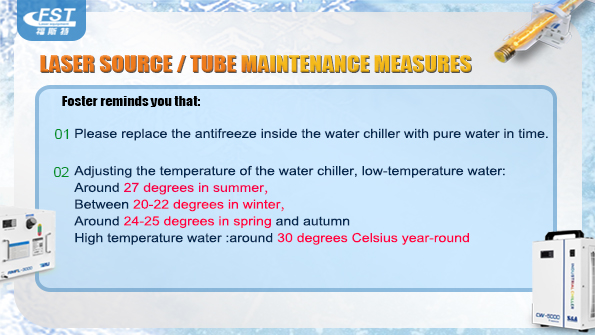
As temperatures gradually increase, many factories are returning to full production capacity. For laser equipment such as laser cutting machines and metal laser welding machines, the
stability of the cooling system is a key factor in ensuring efficient operation and long service life. During seasonal transitions, one critical yet often overlooked maintenance task is timely
replacement of antifreeze in the chiller system.
Why Should Antifreeze Be Replaced in Spring?
During winter, to prevent freezing in the cooling system, many users add antifreeze to the chiller. This is a common and necessary protective measure that helps prevent ice
formation in pipelines, expansion damage, or pump failure under low-temperature conditions.
However, it is important to understand that antifreeze is not designed to serve as a long-term cooling medium.
In most industrial applications, antifreeze primarily contains ethylene glycol, which offers excellent anti-freezing properties and is therefore widely used in industrial cooling systems. However,
once the ambient temperature returns to normal levels, leaving antifreeze in the system for an extended period may lead to several potential issues:
Corrosive effects: Long-term circulation of ethylene glycol solutions may gradually corrode pipes, connectors, and metal components.
Changes in conductivity: Over time, the purity of antifreeze may decrease, leading to increased electrical conductivity, which can pose risks to the stable operation of
laser equipment.
Toxicity concerns: Ethylene glycol is toxic. In the event of leakage or improper handling, it may create safety and environmental risks.
For laser equipment that requires long-term stable operation, the quality of the cooling liquid directly impacts equipment reliability and service life. Therefore, once temperatures stabilize in
spring, replacing antifreeze with purified water or deionized water is a necessary maintenance procedure.
Why Use Purified Water or Deionized Water?
Under normal operating temperatures, the chiller system of laser equipment is best filled with purified water (RO water) or deionized water (DI water) as the circulating coolant. These
types of water offer several advantages:
Extremely low impurity content, reducing the risk of sediment buildup
No scale formation, ensuring efficient heat exchange
Low electrical conductivity, supporting safer and more stable equipment operation
It is important to emphasize that tap water, mineral water, or groundwater should never be used. These water sources contain minerals and impurities that can easily form scale within the
system, reduce cooling efficiency, and potentially affect the stable performance of the laser source.
Recommended Steps for Replacing the Cooling Liquid in Spring
To ensure safe and reliable operation, Foster Laser recommends the following basic maintenance procedure:
1.Turn off the equipment and disconnect the power supply to ensure safety
2.Drain the antifreeze from the chiller and cooling pipelines
3.Flush the cooling system with purified water to remove any residues
4.Refill the system with purified water or deionized water
5.Check the water level, pipelines, and connectors for any possible leakage
After completing these steps, the cooling system will be properly prepared for stable operation during the warmer seasons.
Small Maintenance Actions, Big Impact on Equipment Stability
Many users tend to focus primarily on machine power, cutting speed, or welding performance, while overlooking the importance of cooling system maintenance. In reality, the chiller functions
as the “circulatory system” of fiber laser equipment. Proper water quality management may seem simple, but it directly affects:
Laser source stability
Cutting and welding quality
Overall equipment service life
Long-term maintenance costs
Foster Laser reminds all users:
Adding antifreeze in winter and replacing it with purified water in spring is a standard seasonal maintenance practice for laser equipment.
A simple maintenance step can significantly improve equipment reliability and ensure your machines continue operating efficiently and safely throughout the production season.
Post time: Mar-17-2026

